

FBAR (Foreign Bank Account Report): Essential Guide for U.S. Citizens and Green Card Holders
Are you a U.S. citizen or green card holder living abroad? Do you have foreign bank accounts, investment accounts, or retirement accounts? If so, you may need to file a Foreign Bank Account Report (FBAR) to avoid severe penalties.
Common FBAR Misconceptions:
- "My accounts are too small to report." FBAR threshold applies to combined total, not individual accounts.
- "It's my child's account, not mine." If you have signatory authority or ownership, it may still need reporting.
- "For joint accounts, I only report my half." Report the full maximum balance, even if ownership is shared.
- "The account had no money this year." Accounts with $0 balance may still need reporting.
FBAR compliance is critical. Mistakes or missed filings can result in fines in the tens or even hundreds of thousands of dollars. This guide explains everything you need to know about FBAR reporting, common misconceptions, deadlines, and professional guidance to stay compliant.
What is an FBAR?
The FBAR (Foreign Bank Account Report) is a U.S. Treasury requirement under the Bank Secrecy Act of 1970, designed to combat tax evasion, money laundering, and other financial crimes.
Key points:
- Filed via FinCEN Form 114, separate from your federal tax return
- Submitted to the Financial Crimes Enforcement Network (FinCEN)
- Required for U.S. taxpayers with foreign financial accounts exceeding $10,000 combined
💡 Tip: FBAR is information reporting only – you don’t automatically owe tax by filing, but failing to report can trigger severe penalties.
Why FBAR Compliance is Critical
FBAR violations carry serious consequences:
Type of Violation and Penalty:
Non-willful - Up to $10,000 per violation
Willful - Greater of 50% of account balance or $165,353
Example: In United States v. Tuncay Saydam (2025), a dual Turkish-American citizen was fined $544,933 for failing to report accounts from 2013–2017.
⚠️ Don’t risk it: FBAR compliance mistakes can cost hundreds of thousands of dollars. Professional guidance is essential.
Who Must File an FBAR?
You are required to file an FBAR if you:
- Are a U.S. citizen or green card holder, and
- Hold foreign financial accounts exceeding $10,000 in total at any point during the year
U.S.-based entities such as corporations, partnerships, LLCs, trusts, or estates may also need to file.
What Accounts Must Be Reported
Reportable foreign accounts include:
- Bank accounts – checking, savings, and similar accounts
- Investment accounts – brokerage, mutual funds
- Pensions and retirement accounts – depending on plan type
- Signatory accounts – accounts you can access or manage (e.g., child’s account, business accounts)
- Beneficiary accounts in foreign trusts – usually reported by a U.S. trustee
If unsure, provide all account details to a FBAR professional to confirm what needs reporting.
How to Determine if You Need to File
- Identify the maximum value of each account during the calendar year
- Convert balances to U.S. dollars using Treasury exchange rates (Official Rates)
Add all maximum balances – if > $10,000, you must file an FBAR
Example A:
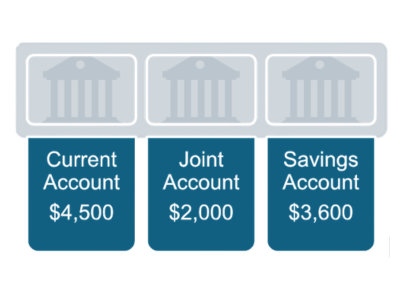
Total: $10,100 → FBAR required
Example B:
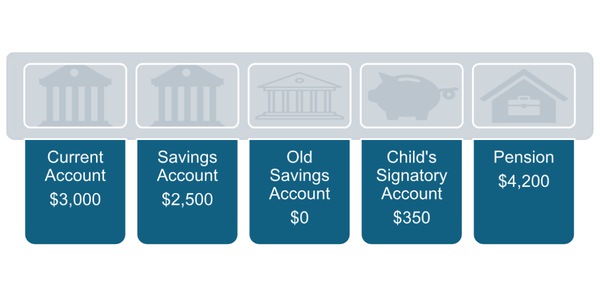
Total: $10,050 → FBAR required
What to Report
- All reportable accounts, even if balance is $0
- Highest balance for each account individually, even if money was transferred
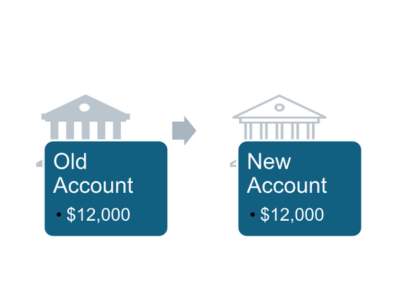
It may appear money is “counted twice,” but this is required by FBAR rules.
Important Dates
- FBAR due: April 15 following the calendar year
- Automatic extension: October 15 (ex. 2025 FBAR is due 15 October 2026)
Recordkeeping: Maintain documents 5 years after filing
How Professional Guidance Helps
Working with an experienced professional can help you:
- Identify which accounts must be reported
- Accurately calculate maximum balances
- Ensure correct and timely FBAR filing
- Avoid penalties and compliance risks
🛡️ Pro Tip: Getting it right the first time can save tens or hundreds of thousands of dollars.
📞 Ready to File Your FBAR?
FBAR reporting can be complex and high-stakes, but at Phinch, we make it simple:
All you need to do is provide the highest balances for each of your foreign accounts.
We will:
- Calculate the correct U.S. dollar amounts using official Treasury exchange rates
- Prepare your FBAR accurately
- File it on your behalf on time and completely compliant
✅ Don’t risk mistakes or penalties – let Phinch handle the details so you can have peace of mind