Fixed-fee accountancy for owner-managed businesses
Small Business Accountants in Somerset & the South West
Phinch are small business accountants based in Weston-super-Mare, working with sole traders, limited companies and growing businesses across Somerset, Bristol, Bath and the wider South West. Accounts, tax, VAT and payroll on one fixed monthly fee, with an accountant who picks up the phone.
Running a small business means wearing every hat at once. We take the finance one off you. Our ACCA and CIOT qualified team keep you compliant with HMRC and Companies House, plan your tax before the year end rather than after it, and give you a straight answer when you call. No call centres, no surprise invoices.

- ACCA
- CIOT
- IRS Enrolled Agent
- ★★★★★ 5.0 from 50+ Google reviews
- Fixed monthly fees
- Est. 2016
What does a small business accountant do?
A small business accountant prepares your annual accounts and tax returns, files them with HMRC and Companies House, runs VAT and payroll, and advises on how to structure the business and pay yourself tax-efficiently. The good ones also flag problems early and plan ahead with you.
At Phinch that means one point of contact who handles:
- Compliance — year-end accounts, Corporation Tax or Self Assessment, confirmation statements and VAT returns filed on time.
- Payroll and pensions — payslips, RTI submissions and auto-enrolment for you and your staff.
- Bookkeeping — done for you, or reviewed if you keep your own records in Xero or QuickBooks.
- Tax planning — salary and dividends, timing of purchases, reliefs and allowances you are entitled to.
- Management information — figures during the year so you can make decisions with the numbers in front of you.
- Advice when it matters — incorporating, taking on staff, buying premises, bringing in a partner or planning an exit.
Accountants for small businesses, sole traders and limited companies
Small businesses come in every shape, and the right support depends on how you trade. We work with all three of the groups below, and we will tell you plainly if moving from one to another would save you tax.
Sole traders & self-employed
Self Assessment, allowable expenses, quarterly updates under Making Tax Digital for Income Tax, and honest advice on whether incorporating makes sense yet.
Limited companies
Statutory accounts, Corporation Tax returns, confirmation statements and a sensible salary-and-dividend plan for directors, all filed on time and explained in plain English.
Startups & growing businesses
The right structure from day one, cash flow forecasts you can actually use, funding-ready numbers and a plan for the next stage.
Small business accounting services
Every small business client gets the compliance basics done properly, plus the kind of proactive advice most firms reserve for bigger clients. Pick what you need now and add the rest as you grow.
- Year-end accounts and financial statements — statutory accounts prepared and filed with Companies House, with a walkthrough of what the numbers mean.
- Corporation Tax — CT600 returns, reliefs claimed, payment dates diarised so nothing lands as a surprise.
- VAT returns and compliance — registration advice, the right scheme for your margins, and Making Tax Digital-compliant returns every quarter.
- Outsourced payroll — payslips, RTI submissions, pensions auto-enrolment and P11Ds handled for you.
- Management accounts — monthly or quarterly figures so you know where you stand before the year is over.
- Company secretarial — confirmation statements, share changes, director appointments and the Companies House admin that trips people up.
- Business advisory and planning — budgets, forecasts and a sounding board for the decisions that matter.
- Tax advisory and planning — structuring, extraction and forward planning so you keep more of what you earn.
- Capital allowances — relief on equipment, vehicles and commercial property that is often left unclaimed.
- R&D tax credits — a straight answer on whether you qualify, and a robust claim if you do.
Most clients run their day-to-day bookkeeping in Xero or QuickBooks with our support. If you would rather hand that over too, we can do it for you.
What does a small business accountant cost?
Most of our small business clients pay a fixed monthly fee that is agreed up front, so you know the cost for the year before we start and there are no surprise invoices for phone calls or questions.
What moves the price is how much work sits behind your business, not how big it feels. The main factors are:
- Structure — a sole trader Self Assessment is simpler than limited company accounts plus a Corporation Tax return.
- VAT — quarterly returns add a regular piece of work.
- Payroll — the number of people paid each month.
- Bookkeeping — whether you keep the records in cloud software yourself or want us to do it.
- Specialist advice — R&D claims, share schemes or exit planning are quoted separately, only when you need them.
The quickest way to get a number is a free 30-minute call. We will ask a handful of questions about how you trade and give you a fixed quote, with nothing hidden in the small print.
Get a fixed-fee quote
Tell us how you trade and we will give you one monthly figure, agreed before we start.
Get a fixed-fee quoteOr call 01934 404000, Mon–Fri 9am–5pm.
Do I need an accountant for a limited company or small business?
There is no legal requirement for a sole trader or a limited company to use an accountant, but almost every small business that grows past its first year finds that one pays for itself.
A limited company has to file statutory accounts with Companies House, a Corporation Tax return with HMRC and an annual confirmation statement, each with its own deadline and automatic penalties. Sole traders now face quarterly digital updates under Making Tax Digital for Income Tax as well as the January Self Assessment. Getting the format, the timing or the tax treatment wrong costs more than the fee to get it right.
The bigger value is in what you do not miss: reliefs you did not know applied, a salary-and-dividend mix that suits your circumstances, and someone flagging a cash flow problem before it becomes one. We have answered the most common questions in our FAQs, including whether a partnership or limited company is right for you.
Why small businesses across the South West choose Phinch as their accountants
Local and reachable
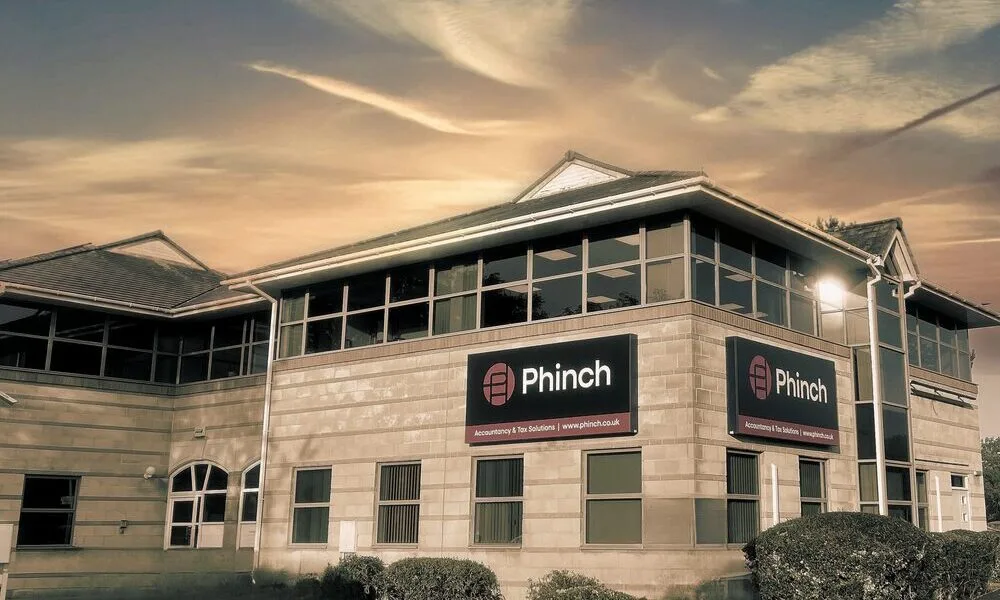
Based in Worle, Weston-super-Mare. We meet clients in person or online across Somerset and the South West, and calls get answered by someone who knows your file.
Fixed fees, agreed up front
One monthly figure that covers the work we have agreed. Extra advice is quoted before we do it, never after.
Properly qualified
Our team holds ACCA and CIOT qualifications, and the firm has been looking after South West businesses since 2016.
UK and US tax in-house
Unusually for a local firm, we have IRS Enrolled Agent expertise on the team. If you or a co-founder have US ties, you do not need a second adviser.
The accountants who look after our small business clients



Small business accountants near you
We work with small businesses in Weston-super-Mare, Bristol, Bath, Taunton, Bridgwater, Exeter, Cheltenham, Gloucester, Swindon and the Mendips. If you are elsewhere in the South West, everything we do works just as well online.
Key dates every small business needs to know
These are the deadlines that catch small businesses out most often. We diarise every one of them for our clients, but it helps to know the shape of the year.
| Filing or payment | Deadline | Applies to |
|---|---|---|
| Self Assessment return and balancing payment | 31 January following the tax year | Sole traders, partners, company directors |
| Payments on account | 31 January and 31 July | Self Assessment taxpayers with a bill over £1,000 |
| Making Tax Digital for Income Tax quarterly updates | 7 Aug, 7 Nov, 7 Feb, 7 May | Sole traders and landlords with qualifying income over £50,000 |
| Annual accounts to Companies House | 9 months after your year end | Limited companies |
| Corporation Tax payment | 9 months and 1 day after your year end | Limited companies |
| Corporation Tax return (CT600) | 12 months after your year end | Limited companies |
| Confirmation statement | Within 14 days of your review date | Limited companies |
| VAT return and payment | 1 month and 7 days after each VAT period | VAT-registered businesses |
| PAYE and National Insurance | 22nd of the following month (electronic) | Employers |
| P11D and Class 1A NIC | 6 July (filing), 22 July (payment) | Employers providing benefits in kind |
Deadlines correct for the 2026/27 tax year. The Making Tax Digital for Income Tax threshold falls to £30,000 from April 2027 and £20,000 from April 2028, so more sole traders and landlords are pulled in each year. Penalties apply automatically for late filing, so if any of these are close, talk to us now.
Sector expertise
Small business accounting is not one-size-fits-all. CIS deductions, locum pay, salon chair rental and marketplace fees all need handling differently, and we have built sector-specific support around the businesses we see most often:
- Construction & trades
- Locum doctors
- Dentists
- Hair & beauty
- Consultants
- Creatives
- Delivery drivers
- Hospitality
- Tech startups
- Ecommerce
Small business accountants FAQs
How much does an accountant cost for a small business?
It depends on your structure and how much work sits behind it. At Phinch, small business clients pay a fixed monthly fee agreed before we start, based on whether you are a sole trader or limited company, whether you are VAT registered, how many people you pay and whether you want us to do the bookkeeping. A free 30-minute call is enough for us to quote.
Do I really need an accountant for my small business?
Not by law, but most owners find it pays for itself within the first year. An accountant keeps you clear of filing penalties, claims reliefs you would otherwise miss, and structures how you take money out so you keep more of it. It also buys back the evenings you would spend on HMRC paperwork.
What is a reasonable charge for bookkeeping for a small company?
Bookkeeping is priced on transaction volume, not turnover. A company with a few dozen transactions a month using Xero or QuickBooks costs far less to keep tidy than one with hundreds and a shoebox of receipts. Many of our clients do their own bookkeeping in the cloud with us reviewing it, which keeps the cost down. We quote bookkeeping separately so you only pay for what you use.
Can I do my own accounting for a limited company?
Yes, legally you can. In practice, statutory accounts have to follow a prescribed format, the Corporation Tax return must be filed in iXBRL, and both carry automatic penalties for late or incorrect filing. Most directors hand this over once the business is trading properly, and use the time they get back on the business itself.
How do I switch accountants?
It is simpler than most people expect. You sign an engagement letter with us, we write to your current accountant to request professional clearance and your records, and we set up authorisation with HMRC so we can act for you. You do not need to wait until your year end, and nothing gets missed in the handover. We have written up the switching process step by step.
What records does HMRC expect a small business to keep?
Sales and purchase invoices, receipts, bank statements, payroll records and VAT records, kept for six years from the end of the financial year for a limited company, or five years after the 31 January deadline for the self-employed. Digital copies are fine, and Making Tax Digital now requires digital records for VAT and for Income Tax.
Should I be a sole trader or a limited company?
It depends on your profit level, how much personal risk you are comfortable with and where you want the business to be in five years. Below a certain profit a sole trader is usually simpler and cheaper to run; above it, a limited company often saves tax and protects your personal assets. We will run the numbers for your situation rather than give you a rule of thumb.
Which accounting software do you work with?
Xero and QuickBooks are the two we use with most small business clients, and we can set either up for you. If you already use something else, tell us on the first call and we will confirm whether we can work with it before you sign anything.
Do you work with small businesses outside Somerset?
Yes. We are based in Weston-super-Mare and meet clients in person across Somerset, Bristol, Bath and the South West, but the work itself is done online for most clients. We look after small businesses across the UK, including owners with US tax obligations.
Get a fixed-fee quote for your small business
Tell us a little about how you trade and we will come back with a fixed monthly figure, usually within one working day.
Call: 01934 404000
Hours: Mon–Fri 09:00–17:00
Office: 505 Park Way, Worle, Weston-super-Mare BS22 6WA